


'/%3E%3C/svg%3E)

Many manufacturing companies still lack a centralized OT backup system.
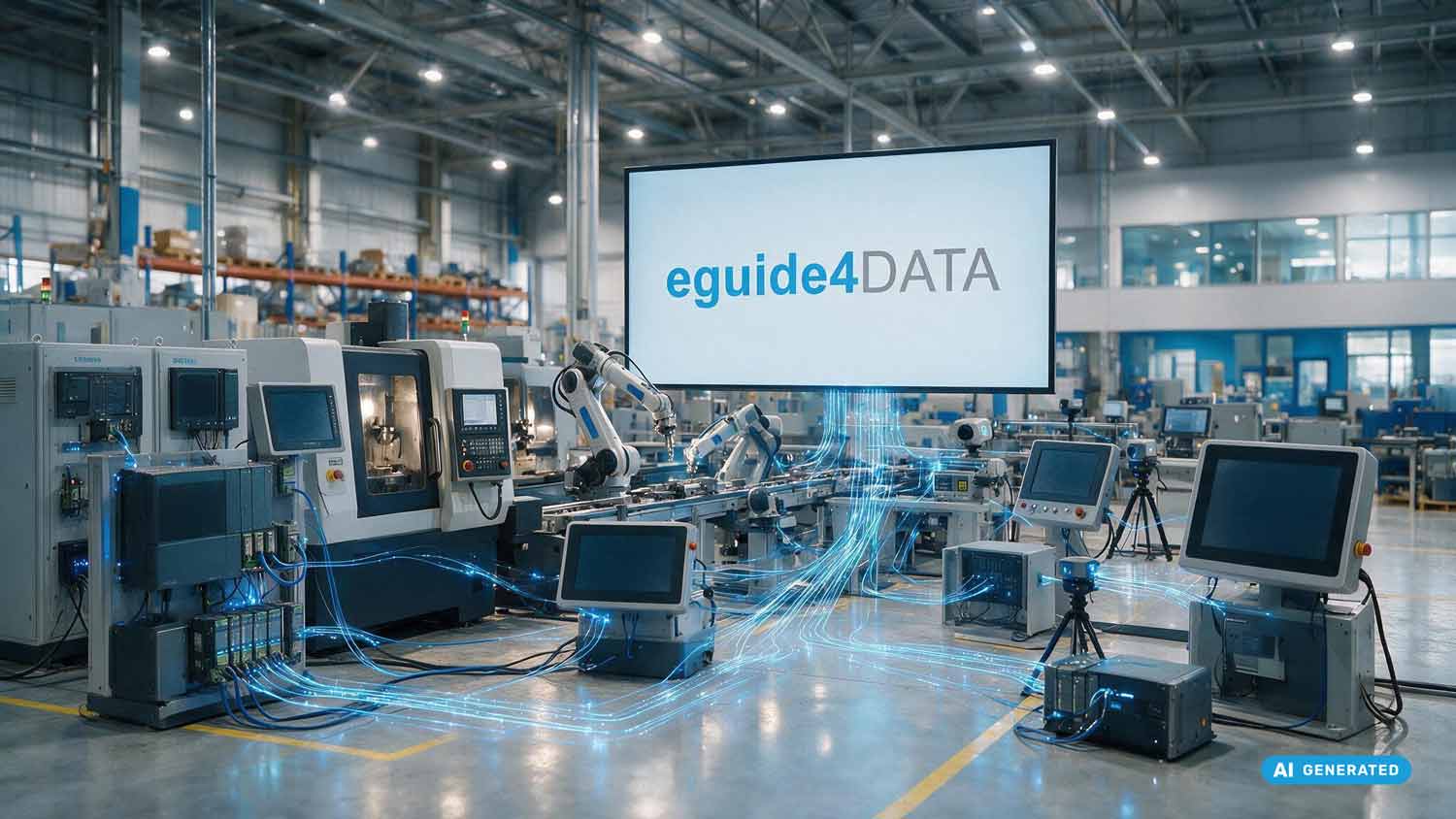
🔧 PLCs, robots, camera systems and HMI devices each come with their own tools, formats and workflows.
As a result, backups are often scattered across:
- 💻 Laptops
- 🌐 Network drives
- 🔌 USB storage devices
When an incident occurs, one critical question often arises:
❓ Where is the latest working version?
This is exactly where eguide4DATA comes in.
👉 Learn more about the platform: eguide4DATA Overview
🏭 The Challenge in Everyday Manufacturing Operations
A typical situation on the shop floor:
- ⚙️ Siemens TIA Portal projects are stored locally on a technician's laptop
- 🖥️ Beckhoff projects are saved on a network drive
- 💾 KUKA backups are stored on USB devices
- 📋 Fanuc parameters are kept inside electrical control cabinets
- 👤 Critical knowledge often resides with individual employees
This creates several challenges:
❌ No centralized access
❌ No version control
❌ No consistent security approach
🔍 Why Do These Challenges Exist?
The problem is usually not the individual manufacturer.
Organizations often lack:
- 📏 Standardized processes
- 🏢 A centralized platform
- 🤖 Automated workflows
Each system works independently. However, a unified strategy across all industrial systems is typically missing.
✅ Vendor-Independent OT Backup as a Solution
A vendor-independent OT backup solution connects different industrial systems through a centralized platform.
eguide4DATA enables:
- 🔗 Access through existing interfaces
- 🤖 Automated extraction of project data
- 🗄️ Centralized storage
- 📝 Version-controlled history
The approach follows a clear objective: instead of relying on multiple standalone solutions, organizations can use a single centralized platform to manage and protect data from different industrial systems.
⚙️ The Difference in Practice
🚨 A Fanuc CNC machine has come to a standstill.
The technician starts searching for documentation and backups. However, the current version of the data is unclear.
With eguide4DATA, the latest available version is centrally accessible. Version histories are fully traceable and critical data can be provided immediately.
✅ Reduced search effort
✅ Greater transparency
✅ Faster access to critical information
🏗️ Step-by-Step Implementation on the Shop Floor
The implementation process is structured, focused and fully manageable.
- 🎯 Prioritize critical assets and production systems
- 🔌 Integrate the first systems
- 📈 Gradually connect additional systems
Initial results are often visible within just a few weeks.
📈 Benefits for Maintenance and IT Teams
A centralized OT backup solution helps organizations achieve:
- ⏱️ Reduced downtime
- 📝 Traceable version history
- 👁️ Centralized transparency
- ✅ Fewer manual errors
Backup information can be located more quickly and made available from a centralized source.
📌 Vendor-Independent OT Backup at a Glance
- 🏢 Centralized management of different industrial systems
- 🔍 Improved visibility into available backup data
- 📚 Traceable version history
- 🤖 Reduced manual processes
- 🤝 Support for OT, IT and management teams
✅ Conclusion
A vendor-independent OT backup strategy is fully achievable with today's technology.
The challenge is often not the integration of different industrial systems, but the decision to adopt a centralized approach.
🎯 This is exactly what eguide4DATA was designed for.
🚀 Experience Vendor-Independent OT Backup in Action
Discover in a personal demo how a centralized OT backup approach brings together different industrial systems and makes backup data centrally available across your organization.
FAQ: About Vendor-Independent OT Backup
What is a vendor-independent OT backup system?
A vendor-independent OT backup system enables the centralized management of backup data from different industrial systems within a single platform.
Why is a centralized OT backup system important?
Backup data is often stored across multiple locations. A centralized approach improves visibility and access to available data versions.
Can systems from different manufacturers be managed together?
Yes. The goal of a vendor-independent OT backup system is the centralized management of data from different manufacturers and automation platforms.
Which systems are mentioned in this article?
This article references PLCs, CNC machines, industrial robots, camera systems and HMI devices as examples.
How do organizations get started?
Implementation begins by prioritizing critical production assets and gradually integrating additional systems.
Where are OT backups commonly stored without a centralized solution?
💻 OT backups are often stored on laptops,
🌐 network drives,
🔌 USB storage devices
or within manufacturer-specific software tools.
What are the benefits of a vendor-independent OT backup solution?
The key benefits include centralized transparency, clear version control, fewer manual errors and reduced downtime.